Why should Obstetrics departments and IVF centers choose a specialized ultrasound simulation system?In-depth analysis
Obstetric and gynecological ultrasound is among the most skill-dependent techniques in modern medicine. From acquiring the correct standard views for fetal biometric measurements and morphological surveys, to assessing follicles during an IVF cycle — the quality of results is inseparable from the skill of the person holding the probe. A view offset of just a few millimeters can alter measurement indices and directly affect clinical decision-making.
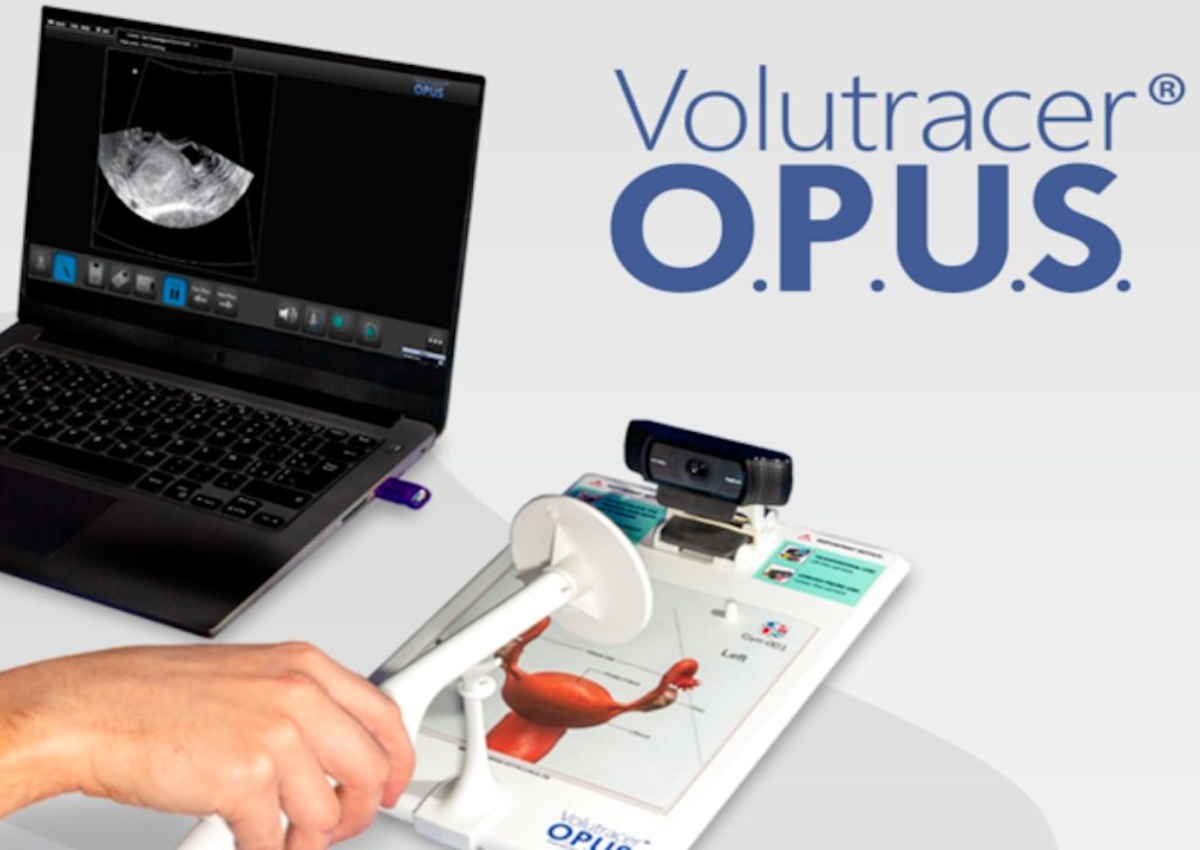
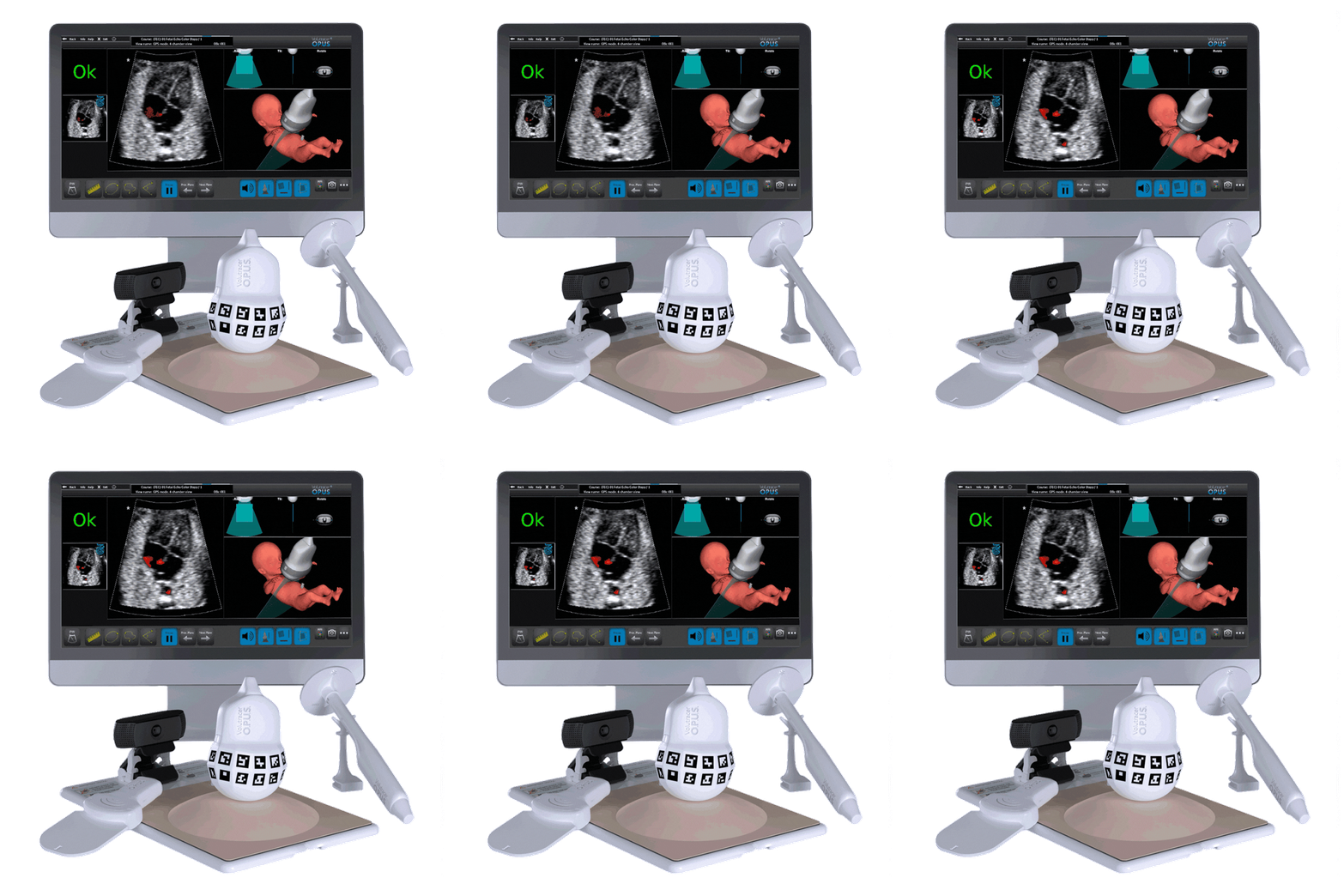
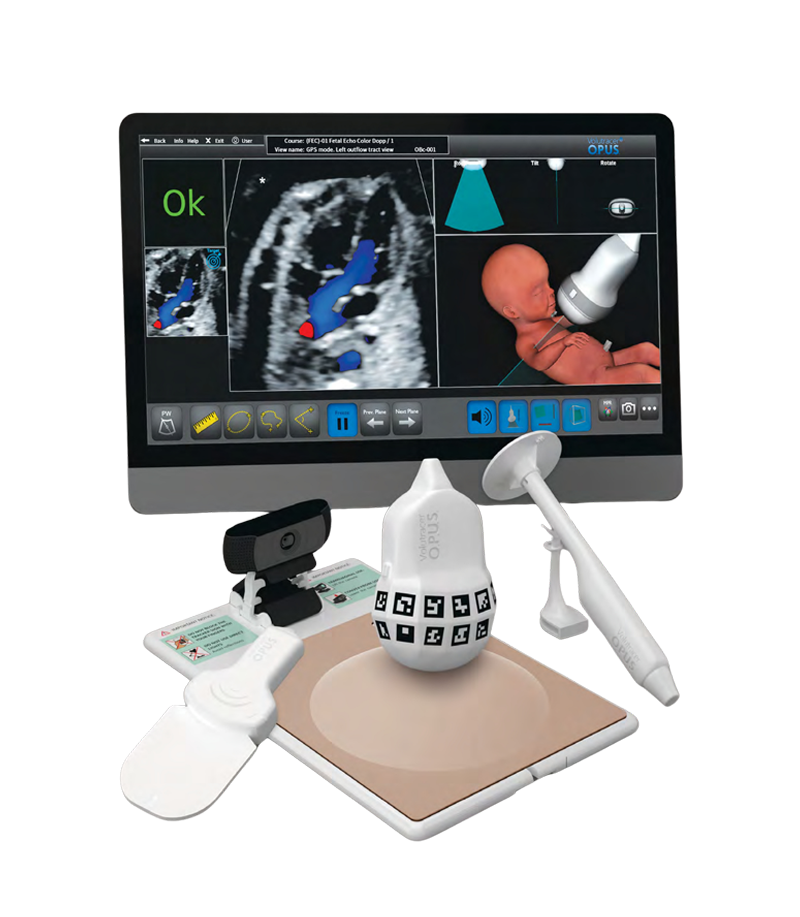
This is why Volutracer O.P.U.S. Plus was designed as a specialized OB/GYN ultrasound simulation system, rather than a broad multi-specialty platform. Every element of the configuration — from the sub-1mm Volumetric 360 probe, to the 1,600+ case library focused on women's health, pregnancy embryology graphics, and the SoftForm Belly accessory — serves a single goal: helping obstetric and gynecological teams achieve and maintain the highest skill standards.
Competency data: the management tool clinical directors need
With five performance metrics — plane accuracy, time to target, travel distance, cumulative angle, and hesitation index — the clinical supervisor can, for the first time, answer with numbers questions previously only answerable by intuition: which physicians are ready to practice independently? where are the team's skill gaps? is the internal upskilling program working? The expert profile comparison feature further allows standardization against the precise "gold standard" the institution chooses.
GPS Guidance in practice: relieving the burden on senior specialists
In most Obstetrics departments, the number of skilled ultrasound specialists is far smaller than the number of physicians who need to improve — and their time is the most precious resource of all. O.P.U.S. Plus's intelligent GPS Guidance technology liberates that resource: the system acts as a "virtual expert," using clear voice commands and concise visual cues to guide each physician to the correct diagnostic view, automatically recording results and generating reports. Senior specialists only need to review consolidated data periodically and intervene where and when it matters — rather than supervising every individual technique. With the OPUSLab Plus model, one supervisor at the MAESTRO station can simultaneously oversee 5 to 30 SOLO stations — something impossible to achieve with traditional methods.
The cost equation for a specialized unit
Not every institution needs to cover cardiology, thyroid, or POC. For Obstetrics departments, maternity hospitals, and IVF centers, investing in a full multi-specialty system may exceed actual operational needs. O.P.U.S. Plus enables a focused and efficient investment: concentrating the budget on exactly what the institution uses daily, while retaining all the core values of the platform — OPUS Cloud free for life, impact-resistant durable hardware, periodic software updates at no charge, and the ability to scale up to OPUSLab Plus with 5–30 stations as the team grows.
Specific applications in reproductive medicine and IVF
For reproductive medicine centers, ultrasound is a daily working tool with very high precision requirements: monitoring follicular development, measuring endometrial thickness, guiding oocyte retrieval. The transvaginal ultrasound skill of each physician directly affects the quality of treatment cycles and patient experience. The O.P.U.S. Plus OB/GYN ultrasound simulation system allows teams to practice these procedures in a controlled environment, drawing from a rich library of gynecological and reproductive clinical cases on OPUS Cloud — before applying them in treatment cycles where the financial and emotional stakes for patients and their families are very high.
A recommended evaluation process for ultrasound simulation investment
Drawing on experience supporting hospitals, TD Tech recommends a four-step evaluation process. First, clearly define the primary specialty focus: if over 80% of needs fall within OB/GYN and IVF, a specialized version like O.P.U.S. Plus typically offers better cost-per-value than a broader platform. Second, request a live demo with the actual team who will use the system — the real-world feel of latency, image fidelity, and GPS Guidance is more informative than any brochure. Third, calculate the 5-year total cost of ownership rather than just the purchase price: include content fees, software update costs, and anticipated probe replacement expenses. Fourth, verify the distributor's local technical support capability — even the best device requires a reliable partner when issues arise.
Across all four criteria, O.P.U.S. Plus delivers a compelling answer: clear specialty positioning, free on-site demo by TD Tech, near-zero operating costs thanks to lifetime-free OPUS Cloud and impact-resistant probes, and a domestic engineering support team from an authorized GE HealthCare dealer.
When should you choose O.P.U.S. 360 instead of Plus?
If your institution is a general hospital, medical university, or simulation center that needs to serve multiple specialties simultaneously — cardiology, general medicine, obstetrics, emergency — then O.P.U.S. 360 with its 5 multi-specialty probes is the more appropriate choice. Conversely, if the budget needs to be concentrated on deep quality within a single specialty, Plus delivers a higher return on investment. For larger health systems with multiple sites, a combined approach — 360 placed at the central simulation center, Plus placed in Obstetrics departments and IVF units — is also a model many institutions have adopted. The TD Tech team is ready to assess your actual needs and propose the optimal solution for each specific situation.
 Email: tdmedical@gmail.com
 Manufactured by Medge Platforms Inc. (USA)
 Distributed by TD Tech — Authorized GE HealthCare Dealer
 Optimized for Obstetrics · Gynecology · IVF